
The Grand Sauces: Five Mother Sauces, Demi-Glace, and the Family Tree
7 minute read | SavorovaS Learn

What makes a sauce grand
Classical French cooking organized itself around five mother sauces, the grand sauces: bechamel, veloute, espagnole, hollandaise, and tomato. The idea is not tradition for its own sake, it is engineering. Each mother sauce is a base method, and once you can make the base, dozens of derivative sauces are one or two ingredients away. That is why culinary schools still teach the tree: it compresses hundreds of sauces into five techniques.
Two of the five are thickened with roux, cooked butter and flour. One is an emulsion of butter and egg. One is reduction and stock craft. One is fruit, cooked down. Master those four methods and you can make most of the sauces in the Western canon without a recipe.
The white pair: bechamel and veloute
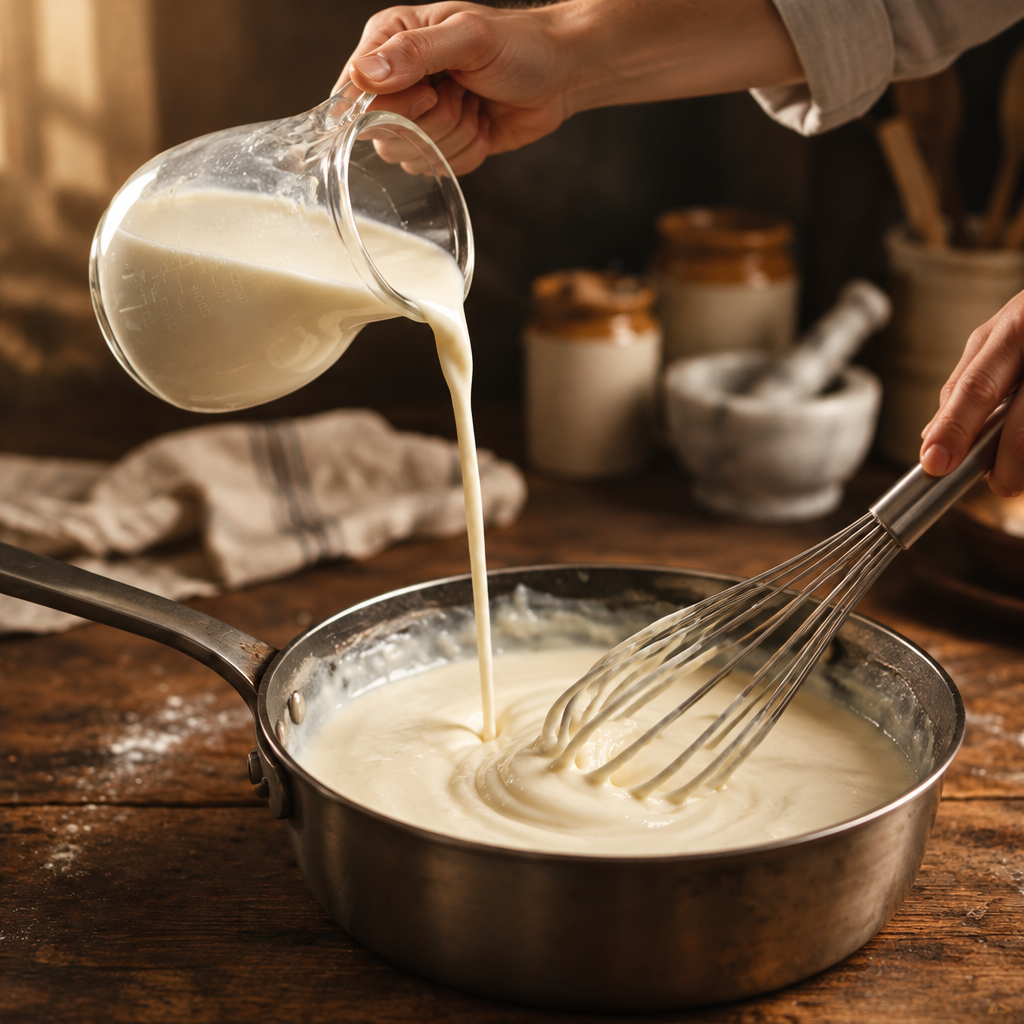
Bechamel is milk thickened with a pale roux: equal parts butter and flour cooked a few minutes without color, then milk whisked in and simmered until it coats a spoon. It is the sauce behind macaroni and cheese, lasagna, moussaka, and creamed vegetables. Its most famous child is mornay, bechamel plus grated gruyere or parmesan, which is cheese sauce made properly instead of with a packet.
Veloute is the same construction with a light stock instead of milk: chicken, veal, or fish stock plus blond roux. Sauce allemande finishes it with egg yolk and cream, sauce supreme with cream and mushroom. Veloute is the quiet professional of the five, the one that turns leftover roast chicken into a dinner that tastes deliberate.
As an Amazon Associate, SavorovaS earns from qualifying purchases.
Espagnole and the road to demi-glace

Espagnole, the brown mother sauce, starts with browned beef or veal stock and a dark roux, plus tomato paste and mirepoix. Cooked down and refined, it becomes demi-glace: espagnole blended with more brown stock and reduced by half into a glossy, intensely savory sauce that is itself the base for sauce bordelaise, sauce chasseur, and most pan sauces that taste expensive.
Demi-glace deserves its reputation. A spoon of it in a pan with the drippings from a roast turns into a restaurant-quality sauce in two minutes, no flour required. It freezes well in ice cube portions, and a half cup in the freezer is the difference between a good kitchen and a great one. Modern kitchens often shortcut it with gelatin-rich brown stock reduced hard, which is legitimate, the point is the glace, not the ceremony.
Hollandaise and bearnaise: warm emulsions

Hollandaise is the only grand sauce that is an emulsion, egg yolks and melted butter whipped into a thick, velvet sauce over gentle heat, finished with lemon. It is the sauce of eggs benedict and asparagus, and it has a reputation for difficulty that is half deserved: the yolks can scramble if the heat is too high, and the emulsion breaks if the butter goes in too fast. The fixes are a double boiler or very low heat, and patience: about three yolks will hold eight to twelve ounces of butter, added in a slow stream; a single strong yolk can emulsify up to six ounces, but that is the ceiling, not the recipe.
Bearnaise is hollandaise's child: the lemon finish is replaced with a reduction of white wine vinegar, shallot, tarragon, and a little chervil, while the egg yolk and butter emulsion stays the same. That one substitution turns a brunch sauce into the classic sauce for steak, which tells you everything about how the family tree works: change one branch, inherit the whole trunk.
Tomato, and how to use the tree
The fifth grand sauce is tomato, and it earned its seat by being the base method for a cuisine: tomatoes cooked down with aromatics into sauce, then finished in infinite directions, puttanesca with olives and capers, creole with the trinity, arrabbiata with chile. Classical tomato sauce is thickened with roux, but the modern and better approach skips it and lets reduction do the work.
The practical way to hold the whole tree in your head: roux plus milk is bechamel, roux plus light stock is veloute, brown stock reduced with dark roux is the road to demi-glace, egg plus butter is hollandaise, and tomato is tomato. Every named sauce you have ever seen on a menu is one of those five plus a flourish. Cook the mothers once a month and the derivatives stop being recipes you look up and become things you improvise.
SavorovaS is an Amazon Associate. Some links on this page are affiliate links, and we earn from qualifying purchases. We recommend products based on professional kitchen practice, not on commission.